
Dhania, also called coriander, is a herbal plant that might have various uses. Its botanical name is Coriandrum sativum L., and it belongs to the family Apiceae. All the parts of this plant might have potential use as a traditional remedy and flavouring agent for various diseases by different civilizations and in the folk medicine system1.
Coriander is a soft and slender plant growing up to 50 cm in height and cultivated throughout India. Dhania is one of the oldest herbs recorded and has been used for more than 5000 years. Young coriander plants are utilized in the kitchen to prepare salads, soups, curries, and sauces, while the fruit obtained from coriander is mainly used as a seasoning for pickles, mixtures, etc. The essential oil of dhania is employed in pharmaceutical formulas. Apart from being used in the kitchen, dhania is also popular for its potential healing properties and possible medicinal benefits2.
Did you know?
The main component of essential oil from coriander seeds is linalool (60%-80%). This essential oil also contains ketones, alcohols, and esters like α-pinene (0.2-8%), geranyl acetate (0.15-4.7%), γ-terpinene (1%-8%), and camphor (0.9%-4.9%)1. In 100 grams of dhania, the nutrients found are2:
In an interesting study, I read that coriander leaf extract, called CSE, was tested on human skin cells and mice to see if it might protect against UV damage. The results showed that CSE may increase collagen production, which keeps the skin healthy, and reduce an enzyme that breaks down collagen. This suggests that coriander leaf extract may help ward off skin ageing caused by the sun7.
Dr. Siddharth Gupta, B.A.M.S, M.D (Ayu)
All parts of dhania have different potential uses and has been used traditionally across the world. Dhania is known for its potential properties like:
Dhania might have the possible uses for human health.

Dhania might help with digestive problems, abdominal discomforts, and loss of appetite. The leaves of dhania may be used as an appetiser and might also help with indigestion and may help relieve stomach cramps and muscle spasms. The fruits of dhania may also be helpful for indigestion. Dhania is also known to be a good carminative (relieving gas accumulation) agent. In some parts of Pakistan, dhania has been used for flatulence, diarrhoea, stomach problems, vomiting, and jaundice. Dhania might also help enhance bowel movements and might function as a mild laxative. It may also be effective against ulcerative colitis and hepatitis2. However, kindly consult a doctor before use.

The leaves of dhania might be consumed and also applied topically for coughs and chest pains. The fruits of dhania might have a potential use against bronchitis, cough, and intermittent fevers. Dhania might also exhibit expectorant (expelling mucus) properties. Seeds of dhania might be helpful for influenza as seen in traditional Chinese medicine. Dhania might also be effective for dyspnoea (difficulty in breathing)1,2. However, respiratory diseases can be serious and must be properly diagnosed and treated by a doctor.

Dhania might help with disorders like pimples, eczema, dry skin, skin ulcers, and blackheads. It may also be helpful for allergies, hay fever, rashes, and urticaria2. However, more research is required to prove such claims.

Dhania, boiled with milk, might have positive effects on the central nervous system and may help with syncope, vertigo, and memory loss. It might also help relieve anxiety. Dhania may also be helpful for insomnia (sleeplessness). Due to its vitamin K content, dhania may be helpful for Alzheimer’s disease. The aqueous and ethanolic extracts of coriander seeds might also have a potent use against convulsions1,2. However, more research is required to ascertain such claims. Therefore, kindly consult a doctor for diseases related to the central nervous system and do not self-medicate.
From what I have seen, coriander seeds might be a potentially healthy ingredient to include in your diet. Coriander seeds, whether raw or roasted, may have beneficial properties as a functional food. They contain compounds that might show inhibitory effects on tumour cell growth8.
Dr. Rajeev Singh, BAMS

Dhania might be good for the eyes, and it may decrease the burning sensation and irritation. The antioxidants present in dhania might have a potential to help with eye diseases2. However, consult a doctor for proper diagnosis and treatment of eye problems.
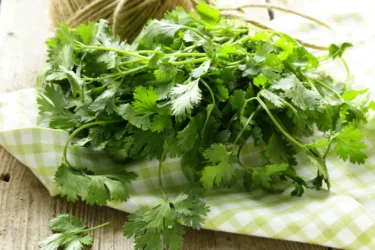
Diuresis means expelling excess fluid and salt from the body. According to studies, the seeds of dhania might help enhance diuresis, glomerular filtration rate, and might lead to excretion of electrolytes from the body in a dose related manner2. However, more research is required to confirm such potential effects of dhania.

Dhania might prove to be helpful for diabetic patients. It may help with diabetes by stimulating insulin secretion and might lower blood sugar levels in the body2. However, conditions like diabetes should be properly diagnosed and treated by a doctor. So, kindly consult a doctor and do not self-medicate.
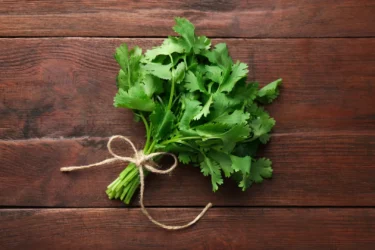
According to studies, the essential oil of dhania obtained from the seeds might exhibited potential antifungal activity against Candida albicans. Essential oil and aqueous extract of coriander leaves might exhibit inhibitory activity against Gram-positive group of bacteria like Staphylococcus aureus, Bacillus sp and Gram-negative bacteria like Escherichia coli, Salmonella typhi, Proteus mirabilis etc1. The decoction obtained from dhania leaves and seeds might also help reduce fever2.
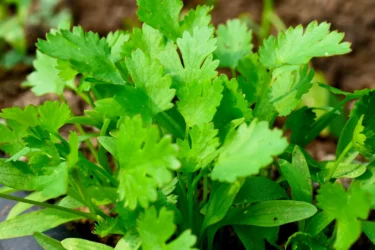
According to animal studies, coriander seeds might exhibit potential cholesterol lowering effects. The observations made were a possible reduction in triglyceride levels, low density lipoprotein (bad cholesterol) and very low density lipoprotein. There was also a potential increase in high density lipoprotein (good cholesterol) levels1.
Though there are studies that show the potential uses of dhania in various conditions, these are insufficient and there is a need for further studies to establish the true extent of the benefits of dhania on human health.
As per my observations, coriander leaves might act as a natural detoxifier and chelation agent. It may help flush out heavy metals from the body after chemotherapy or remove mercury based dental fillings. However, more research is needed to thoroughly understand its effectiveness9.
Dr. Smita Barode, B.A.M.S, M.S.
Dhania essential oil is used in different ways like:
The green leaves of coriander, also called cilantro, are utilised in the preparation of salads, Mexican salsas, chillies, seafood dishes and different ethnic foods. The aromatic coriander fruit or seeds are used in dishes, bread, soups, stews, curry meat, and puddings3.
You must consult a qualified doctor before taking any herbal supplements. Do not discontinue or replace an ongoing treatment of modern medicine with an ayurvedic/herbal preparation without consulting a qualified doctor.
Dhania as a seasoning and spice is considered safe by the US Food and Drug Administration. Dhania and its constituent linalool have been tested for safety. Dhania and linalool did not have toxicity, denoting that dhania essential oil is safe for use. Dhania leaves and seeds have not been associated with any adverse events when used in traditional medicine.
However, there was a case report of a woman from Iran who reported endocrine toxicity when she had consumed an excess of dhania leaf extract for seven consecutive days3. Therefore, exercise caution while using dhania.
Also Read: Thyme (Banajwain): Uses, Benefits, Side Effects and More By Dr. Rajeev Singh
General precaution and a discussion with your doctor before consuming dhania is recommended, especially by pregnant women and lactating mothers.
It might have unknown reactions with drugs. However, more research is required to find out such reactions.
Dhania, also known as cilantro or coriander, is a herbal plant that might have various medicinal and culinary uses. It is used as a herbal flavouring agent in the preparation of sauces, salads, chillies, seafood dishes, Mexican salsa, and different ethnic foods. Dhania is also used to prepare herbal medicines3.
Dhania is known by various names like Chinese parsley, coriander, cilantro, coriandro, coriander, culantrillo. Its scientific name is Coriandrum sativum6.
Coriandrum sativum is a native herb of Italy and is cultivated in the Mediterranean regions like Egypt, Morocco, Malta, Asia (Bangladesh, Pakistan, China, and India), and central and eastern Europe1.
Yes, the juice obtained from fresh dhania leaves, when applied to the forehead, might help with headaches2. However, more research is required to prove these possible effects of dhania for heaaches.
Yes, dhania might have a potential to help with urethritis and urinary tract infections. It may also help with problems related to the bladder1,2. Kindly consult a doctor and do not self-medicate.
Due to its high iron content, dhania may be helpful for people suffering from anaemia2. However, more research will be required to prove these claims.
Yes, the essential oil of dhania might have antifungal potential . Dhania essential oil might exhibit fungicidal (fungi killing) properties against Candida albicans2. However , more research is required to ascertain such claims.
In India, dhania is widely cultivated in Maharashtra, Uttar Pradesh, Rajasthan, Madhya Pradesh, Karnataka, Bihar, Tamil Nadu, West Bengal, Andhra Pradesh, and Jammu and Kashmir2.
In Ayurvedic medicine, the seeds of dhania are used with caraway and cardamom seeds and might be helpful for digestion related problems1. Kindly consult a doctor before use. Do not self-medicate.
In traditional Chinese medicine, seeds of dhania may be helpful for indigestion, stomach pain, bad breath, influenza, and anorexia (loss of appetite)1. However, more research is required to prove such effects.
Yes, dhania might have potential use as an ointment to deal with arthritis (swelling of joints) and rheumatism (a condition affecting muscles, bones, and joints)1. More research is required to prove its potential use.
The potential antiseptic properties of dhania might help deal with mouth ulcers2. Please consult a doctor for proper diagnosis and treatment of mouth ulcers.
Disclaimer: The information provided here is for educational/awareness purposes only and is not intended to be a substitute for medical treatment by a healthcare professional and should not be relied upon to diagnose or treat any medical condition. The reader should consult a registered medical practitioner to determine the appropriateness of the information and before consuming any medication. PharmEasy does not provide any guarantee or warranty (express or implied) regarding the accuracy, adequacy, completeness, legality, reliability or usefulness of the information; and disclaims any liability arising thereof.
Links and product recommendations in the information provided here are advertisements of third-party products available on the website. PharmEasy does not make any representation on the accuracy or suitability of such products/services. Advertisements do not influence the editorial decisions or content. The information in this blog is subject to change without notice. The authors and administrators reserve the right to modify, add, or remove content without notification. It is your responsibility to review this disclaimer regularly for any changes.
 5
5  1
1Coriander leaves, widely regarded as one of the oldest herbs, are known to enhance the visual appeal and flavour of a dish. While all parts of the coriander plant are edible, it is the fresh, aromatic leaves and dried seeds that are most commonly incorporated into Indian recipes.
This article focuses on Dhaniya or Coriander Leaves, which is also referred to as Cilantro by some. The name Coriander is derived from the Greek word koris, meaning stink bug, likely because of its distinctive aroma released by the leaves when they are chopped or bruised.
Coriander is a herb with a history that dates back to 5000 BC and is thought to have originated in Italy. Surprisingly, despite its non-Indian origins, coriander has become an integral part of every Indian household. Indian recipes are considered incomplete without the addition of coriander leaves, making it even more intriguing to explore this modest yet essential herb.
Coriander Leaves are a rich source of vitamin A and vitamin C, providing essential nutrients that contribute to overall health. In addition to these vitamins, coriander leaves contain dietary fibre, iron, manganese, calcium, vitamin K, and phosphorus.
This remarkable herb also consists of 11 essential oils, is low in saturated fat, and contains a significant amount of linoleic acid, which offers numerous health benefits. 100 grams of coriander leaves may contain approximately 87.9% moisture, 6.5% carbohydrates 3.3% protein, 0.14% calcium, 0.06% phosphorus, and 0.01% iron. They also provide 60 mg of vitamin B₂, 0.8 mg of niacin, 135 mg of vitamin C, and 10,460 IU of vitamin A1.

Coriander leaves have long been recommended by our grandmothers for promoting healthy eyes. This is because of their high content of vitamin A, vitamin C, vitamin E, and carotenoids, all of which contribute to maintaining good vision2. Research3 has also shown that regular consumption of coriander may also help in the healing of conjunctivitis.

Coriander leaves are a valuable source of vitamin C, vitamin E, and vitamin A, all of which play a crucial role in enhancing the immune system. Vitamin C, in particular, supports the effective functioning of white blood cells and helps in the absorption of iron, further strengthening immunity over time1.

The vibrant green colour of coriander is due to its rich antioxidant content, which helps stimulate enzyme activity. This, in turn, promotes insulin secretion, which helps reduce blood sugar levels. Incorporating coriander into daily meals or consuming coriander-infused water may prove beneficial for individuals managing high blood sugar levels4.

High cholesterol is now recognised as a common and significant health concern. Regular consumption of coriander leaves may help reduce LDL (bad) cholesterol levels while improving HDL (good) cholesterol, contributing to better cardiovascular health5.

Coriander leaves are rich in minerals such as calcium, phosphorus, manganese, and magnesium. Additionally, their anti-inflammatory properties may help protect the bones, alleviating pain associated with arthritis6.

Coriander leaves are a good source of fibre, which can help alleviate digestive issues. They are also being studied for their potential to address various digestive concerns, including stomach upset, diarrhoea, bowel spasms, gas, and nausea2.

Coriander leaves are rich in iron, vitamin E, and vitamin A, which may help reduce free radicals that can damage the skin. Additionally, coriander acts as a remedy for oily skin by absorbing excess oil. Its antimicrobial, antiseptic, and antifungal properties also contribute to soothing and cooling the skin7.

Coriander extract has been studied for its potential diuretic properties, which help eliminate excess water and sodium from the body8. This process can contribute to lowering blood pressure and as previously noted, assist in managing cholesterol levels. These properties may help reduce the risk of heart disease. Furthermore, coriander is often used as a garnish and flavouring, and incorporating it into meals may help decrease sodium intake by reducing the need for additional salt seasoning.

A study9 has shown that coriander extract may protect brain cells from damage and improve memory in mice. This effect is likely attributed to coriander’s anti-inflammatory properties, as many forms of brain degeneration are linked to inflammation.

Coriander possesses antimicrobial properties that can help combat infections, including foodborne illnesses, due to its plant compounds. One such compound, Dodecenal, has shown particular effectiveness against Salmonella infections. Additionally, coriander seeds have demonstrated protective qualities in fighting urinary tract infections. The oil derived from coriander can also be incorporated into antimicrobial products to address food-related diseases10. The benefits of coriander in combating infections may be obtained either by consuming the herb directly or by using various products that contain coriander extracts.
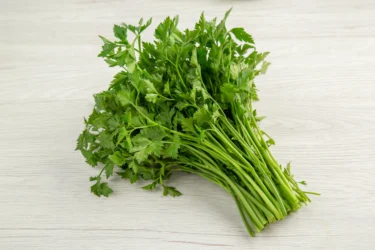
Coriander can be easily incorporated into the diet. Fresh coriander leaves are widely available in most fresh produce markets, while coriander seeds, dried leaves, and powder can be found in many grocery stores. The leaves can be added to salads or used as a garnish for various dishes. Coriander seeds are suitable for use in roasts, baked goods, pickles, vegetable preparations, and other cooked meals. Additionally, coriander can be blended with ingredients such as garlic, lemon juice, coconut milk, and peanuts to create a flavourful marinade.
Like mint and many other herbs, coriander leaves are now used as an ingredient in mouthwashes. Coriander leaves are believed to have antioxidant and antifungal properties, which may help in maintaining oral health12.
Dr. Rajeev Singh, BAMS
Also Read: Know About 20 Super Healthy Leaves You Must Eat!
You can add coriander to dals, sabzis, salads, or raitas for enhanced flavour and nutritional benefits. For skincare, a paste made from fresh coriander leaves can be applied to the skin and washed off after 15 minutes.
Fresh coriander juice is beneficial in meeting daily vitamin and mineral requirements. It may be consumed as one glass per day or by adding 1 to 2 teaspoons to a glass of buttermilk.
Coriander leaves can also be incorporated into snacks or breakfast items such as non-fried kothambir wadi, dhania paratha, or coriander tomato salsa to name a few.
Including coriander leaves in your regular diet may be beneficial but ensure to consult with a doctor before making any changes to your diet.
Based on some studies11, consuming coriander leaves might have sedative effects and might help with insomnia and anxiety in some people.
Dr. Siddharth Gupta, B.A.M.S, M.D (Ayu)
Coriander and its extract may significantly lower blood pressure, potentially interfering with prescribed blood pressure medications. This may cause hypotension (abnormally low blood pressure). Symptoms of hypotension include anxiety, palpitations, sweating, and hunger. It is advisable to consume only a small amount of coriander daily, and even less when using its extract. Blood pressure should be monitored regularly, and any concerns should be reported to a doctor. Medical advice should be taken before continuing daily consumption of coriander extract as it may have a pronounced effect on blood pressure.
Also Read: Moringa Leaves – Health Benefits That You Should Know
Coriander leaves impart an aromatic flavour and refreshing fragrance to a variety of Indian dishes, including dals, sabzis, soups, and curries. In addition, daily consumption of fresh coriander leaves may support immunity, reduce bad cholesterol, soothe the skin, improve digestion, regulate blood sugar levels, and promote bone health. Including this distinctive herb in your recipes may contribute to enhancing overall well-being.
Also Read: 8 Unknown Benefits of Mango Leaves
Disclaimer: The information provided here is for educational/awareness purposes only and is not intended to be a substitute for medical treatment by a healthcare professional and should not be relied upon to diagnose or treat any medical condition. The reader should consult a registered medical practitioner to determine the appropriateness of the information and before consuming any medication. PharmEasy does not provide any guarantee or warranty (express or implied) regarding the accuracy, adequacy, completeness, legality, reliability or usefulness of the information; and disclaims any liability arising thereof.
Links and product recommendations in the information provided here are advertisements of third-party products available on the website. PharmEasy does not make any representation on the accuracy or suitability of such products/services. Advertisements do not influence the editorial decisions or content. The information in this blog is subject to change without notice. The authors and administrators reserve the right to modify, add, or remove content without notification. It is your responsibility to review this disclaimer regularly for any changes.
165
6


