Last updated: Sep 8, 2026Published on: Apr 22, 2025
Table of Contents
Introduction
Psyllium husk or isabgol husk is a natural polymer1,2. It’s made from the outer layers of the seeds of Plantago ovata Forsk (P. ispaghula Roxb.). Isabgol is rich in fibre and mucilage. Mucilage is a colourless gelling agent capable of expanding in volume as it absorbs water up to 40 times its weight1. Dietary fibre obtained from psyllium husk may be used in processed foods, as an ingredient of foods, and in health supplements2.
Originating from Western Asia, isabgol is an annual herb.Indian Muslims introduced its medicinal properties from seeds collected firstly from some wild species3. India is presently the major producer and exporter of isabgul husk in the world4.
Nutritional Value of Isabgol
The nutrients present in psyllium husk are as follows2:
Advertisement
Protein: 0.94 %
Albumin: 35.8 %
Globulin: 23.9 %
Prolamin: 11.7 %
Total carbohydrates: 84.98 %
Benefits of Isabgol
Isabgol has several advantages for maintaining a healthy life. It is safe and effective for some conditions if taken in a recommended dose.
1. Gastrointestinal Issues & Bowel Diseases
Managing Constipation: Isabgol contributes to the ease of passage of the stools as it adds unfermented gel, which functions as an emollient and lubricant agent. Studies1 and clinical trials have shown that it significantly increased moisture in stools and both dry and wet stool weight in patients with gastrointestinal disease. Due to these properties, isabgol is used to manage constipation.
Managing Diarrhoea: Studies1 have shown that isabgol also helps slow down the colon transit and gastrointestinal emptying time; this property is beneficial to people suffering from diarrhoea or faecal incontinence from liquid stools.
Managing Bowel Diseases: Supplementing isabgol may help in the management of inflammatory bowel disease, irritable bowel disease and ulcerative colitis due to its anti-constipation activity. Anaerobic fermentation of isabgol fibre in the intestines results in a large production of metabolites, which have antioxidant and anti-inflammatory properties1.
2. Managing Colorectal Cancer
Isabgol may restrict butyric acid’s antineoplastic activity. Thus, it’s considered beneficial in preventing colorectal cancer5.
3. Supports Cholesterol Management
Isabgol fibres (soluble and insoluble) have significance in reducing total low-density lipoprotein and serum cholesterol. Thus, it helps reduce the risk of heart diseases5.
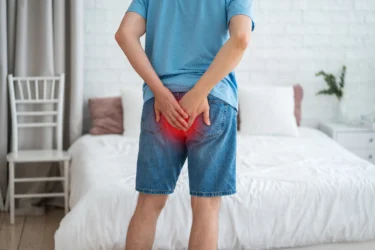
4. Managing Haemorrhoids
Supplementing isabgol in the diet is helpful in managing haemorrhoids. Since isabgol helps in dealing with both constipation and loose stools, it would also help in managing haemorrhoids. In a comparative study8, people treated with a placebo of B vitamins had no major difference, and those consuming isabgol had a reduction of bleeding.
5. Managing Type II Diabetes
Studies9 on a population with type II diabetes have shown that isabgol husk effectively improved glycaemic and lipid control after meals.
Including psyllium in your diet may help regulate your blood sugar levels and improve your overall metabolic health. Psyllium has the ability to enrich certain foods like breakfast cereals, pasta, bread, and some snacks, which can be beneficial for individuals with lipid and carbohydrate metabolism disorders, especially obese adolescents and children.
Isabgol should be taken with an adequate amount of water or some other fluid.
One must not consume isabgol if they have trouble swallowing or any throat problems.
You must seek immediate medical attention if, after consuming isabgol, you experience chest pain, breathing issues, difficulty in gulping, congestion, or vomiting.
Prescribed drugs are advised to be taken separately from isabgol to reduce the interaction possibilities.
Consuming isabgol husk in the long term can reduce the absorption of vitamin B12, zinc, iron, magnesium and copper. It may also affect calcium absorption.
It may reduce dietary carbohydrate absorption.
It is recommended to take drugs at separate administration times (preferably, one hour before) from isabgol husk as there may be possible interactions5.
Incorporating psyllium into your diet may be beneficial as psyllium husk might be a natural prebiotic. Psyllium husk contains about 15% fermentable fibre, which can support the growth of beneficial bacteria in your gut.
Some drugs may show reduced absorption if taken with isabgol husk or isabgol-containing products, as they may tend to slow down gastric emptying time5.
The levels of drugs given to reduce the risk of heart diseases may also be affected. Thus, it should be taken under medical supervision5.
Insulin doses must be reduced when insulin-dependent diabetics consume isabgol husk with meals5.
Medical supervision is needed to adjust the dose of thyroid hormones when taking isabgol husk simultaneously5.
Isabgol should be consumed under medical supervision with medicinal products that inhibit peristaltic movements (muscle contractions that move food through the digestive tract)5.
Yes, many researchers have investigated the potential health benefits of isabgol husk, particularly in weight loss and controlling obesity in children and adults4.
Can isabgol husk have an impact on the menstrual cycle?
Yes, some studies6 have shown that taking isabgol husk for weight loss may lead to menstrual disturbances like prolongation of the cycle by 7-10 days and irregular menstrual cycles.
Can I take isabgol while fasting?
No, you should avoid consuming isabgol while fasting due to potential reductions in blood sugar levels caused by isabgol2,5.
Can we take isabgol with milk?
Yes, isabgol should be taken with a sufficient amount of water or any other fluid like milk5.
Does isabgol have benefits in inflammation?
Yes, isabgol may help in relieving inflammation, as it has anti-inflammatory properties7.
Does isabgol have benefits in skin treatment?
No, there are no reported benefits of isabgol husk in skin treatment.
Hashem MA, Abd-Allah NA, Mahmoud EA, Amer SA, Alkafafy M. A preliminary study on the effect of Psyllium husk ethanolic extract on hyperlipidemia, hyperglycemia, and oxidative stress induced by Triton X-100 in ection in rats. Biology. 2021 Apr;10(4):335. Available from: https://www.mdpi.com/2079-7737/10/4/335
Anderson JW, Allgood LD, Turner J, Oeltgen PR, Daggy BP. Effects of psyllium on glucose and serum lipid responses in men with type 2 diabetes and hypercholesterolemia. Am J Clin Nutr. 1999 Oct;70(4):466–73. doi: 10.1093/ajcn/70.4.466. PMID: 10500014. Available from: https://pubmed.ncbi.nlm.nih.gov/10500014/
Oliver SD. The long-term safety and tolerability of ispaghula husk. J R Soc Promot Health. 2000 Jun;120(2):107–11. doi:10.1177/146642400012000208. PMID: 10944885. Available from: https://pubmed.ncbi.nlm.nih.gov/10944885/
Disclaimer: The information provided here is for educational/awareness purposes only and is not intended to be a substitute for medical treatment by a healthcare professional and should not be relied upon to diagnose or treat any medical condition. The reader should consult a registered medical practitioner to determine the appropriateness of the information and before consuming any medication. PharmEasy does not provide any guarantee or warranty (express or implied) regarding the accuracy, adequacy, completeness, legality, reliability or usefulness of the information; and disclaims any liability arising thereof.














 7
7  2
2














Comments