

202+ orders placed in your location

100% NABL & ISO Certified Lab • 100% Accurate Reports
Cancer Antigen 19.9 (CA 19.9) Test
Cancer Antigen 19-9, CA 19-9 Assay, CA 19-9 Radioimmunoassay, Cancer-Associated Antigen 19-9, Carbohydrate Antigen 19-9
- SummaryThe CA 19.9 test measures the level of Cancer Antigen 19.9 in the blood, primarily used to monitor pancreatic cancer and sometimes gastrointestinal, bile duct, or gallbladder cancers. It is not used for general cancer screening but helps track treatment response or recurrence. The test is done using a blood sample, and fasting is not required, though your doctor may suggest it if combined with other tests. Read more
- Reports Within11 HrsView Sample Report

 100% NABL & ISO Certified Labs
 - SampleBlood

- AgeUsually Adults
- GenderMale and Female
- FastingNot Required

PharmEasy Promises



Know More About The Test


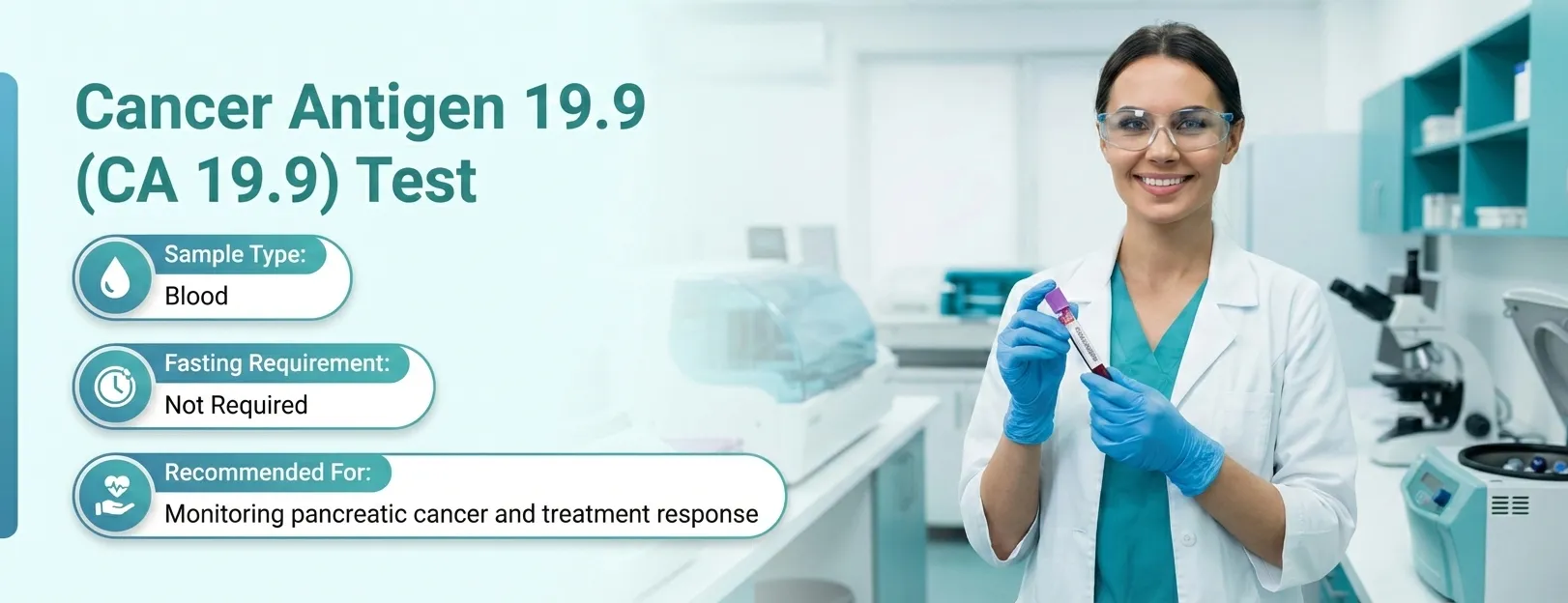
A quick info on Cancer Antigen 19.9 (CA 19.9) Test

Overview
Cancer antigen 19-9 (CA 19-9) is a blood test that measures the level of a protein called cancer antigen 19-9 in the blood. This test is also known as carbohydrate antigen 19-9, CA 19-9 measurement, CA 19-9 pancreatic cancer marker, or CA 19-9 radioimmunoassay (RIA).
CA 19-9 is a tumour marker that may be produced by certain cancer cells or by normal cells in response to some cancers. High levels of CA 19-9 can be a sign of bile duct, colorectal, stomach, ovarian, or bladder cancer, in addition to pancreatic cancer. CA 19-9 levels may also be elevated in other conditions such as gallstones, pancreatitis, liver disease, and cystic fibrosis.

When and Who Should Get a Cancer Antigen 19.9 Test Done?
The CA 19-9 test may be recommended when a person has signs and symptoms suggestive of pancreatic or biliary tract disease, such as:
- Persistent or severe abdominal pain
- Reduced appetite
- Sudden or unexplained weight loss
- Yellowing of the skin and eyes (jaundice)
- Unexplained fatigue or weakness
- Swelling of the liver or gallbladder
- Pale or clay-coloured stools
- Recently diagnosed diabetes with no clear cause
Doctors may also recommend a CA 19-9 blood test for individuals who:
- Have suspected pancreatic or certain other types of cancer.
- Are undergoing treatment for cancer (to monitor treatment response).
- Have recovered from certain cancers (to monitor for recurrence).
- Have known conditions such as pancreatitis, liver disease, or bile duct obstruction (to assess and monitor the condition).
Note: CA 19-9 is mainly used to monitor cancer and is not recommended as a routine screening test for healthy individuals. The results should be interpreted by an experienced doctor along with symptoms, scans, and other laboratory tests.
.png?dim=48x48&q=75)
How Frequently Should You Take the Cancer Antigen 19.9 Test?
The table below provides a general guide on how often a CA 19-9 blood test is recommended:
|
Health scenario |
Context |
Recommended frequency |
|---|---|---|
|
Pancreatic or certain other cancers |
To monitor for treatment effectiveness. |
At regular intervals as directed by the doctor (usually once every 1 to 3 months). |
|
Suspected cancer evaluation |
To evaluate symptoms like jaundice, sudden weight loss, severe abdominal pain, and poor appetite. |
As directed by the doctor (when symptoms persist or worsen). |
|
Post-treatment follow-up |
To monitor for recurrence in people who have recovered from cancer. |
At regular intervals, as recommended by the doctor. |
|
Other conditions that may elevate CA 19-9 levels |
To monitor conditions like pancreatitis, bile duct obstruction, and liver issues. |
When recommended by the doctor. |
Note: The frequency of CA 19-9 testing may vary depending on an individual's medical condition, symptoms, treatment plan, and overall health status. The recommendations provided above are for general awareness and should not replace medical advice. Always follow the testing schedule recommended by the doctor.

What Conditions Can a Cancer Antigen 19.9 Test Help Detect?
A CA 19-9 test may help assess and monitor several cancerous and non-cancerous conditions, such as:
- Pancreatic cancer: The primary cancer associated with elevated CA 19-9 levels. The test is commonly used to support its diagnosis and monitor treatment.
- Gastrointestinal cancers: Elevated CA 19-9 levels may also occur in cancers of the stomach, colon, rectum, and liver.
- Pancreatitis: Inflammation of the pancreas can cause a temporary rise in CA 19-9 levels.
- Bile duct obstruction: Blockage of the bile ducts due to gallstones or an infection can increase CA 19-9 levels.
- Liver diseases: Conditions such as hepatitis and cirrhosis may lead to elevated CA 19-9 levels.
- Cystic fibrosis: This is an inherited genetic disorder that causes thick, sticky mucus to build up in the lungs, digestive system, and other organs, leading to breathing and digestive problems. This can increase CA 19-9 levels.
.png?dim=48x48&q=75)
Cancer Antigen 19.9 Test Preparation
What to Expect Before the Cancer Antigen 19.9 Test
No fasting is required for a standalone Cancer Antigen 19.9 test. You can eat and drink normally. However, if it is part of a broader package that includes fasting tests, your doctor may advise fasting for 8-12 hours. Avoid strenuous exercise for 24 hours before the test, as intense physical activity can temporarily raise cancer antigen 19.9 levels and affect interpretation. Always inform your doctor about any ongoing medications.
What to Expect During the Blood Collection
A phlebotomist cleans the skin with an antiseptic, then places an elastic band around your upper arm to make the veins easier to access. A small needle is inserted into the vein; you may feel a brief pinch. Blood is collected into a labelled tube in under a minute.
What to Expect After the Cancer Antigen 19.9 Test
A small cotton swab and bandage are placed over the site to stop any minor bleeding. You can return to normal activities immediately. Minor bruising is normal and disappears quickly. If dizzy, sit and rest for a few minutes.

What are the Parameters Included in a Cancer Antigen 19.9 Test?
Only one parameter is measured in the CA 19-9 test:
- Cancer antigen 19-9 (CA 19-9)

Normal Range of Cancer Antigen 19.9 Test Parameters
The CA 19-9 normal range is mentioned below:
|
Parameter |
Normal range |
|---|---|
|
CA 19-9 |
≤34 U/mL |
.png?dim=48x48&q=75)
Cancer Antigen 19.9 Test Result Interpretation
The following table will help in understanding what higher or lower values than the CA 19-9 normal range may indicate:
|
CA 19-9 level |
Interpretation |
|---|---|
|
Higher than normal |
May be associated with pancreatic, bile duct, colorectal, stomach, ovarian, or bladder cancers. Elevated levels can also occur in non-cancerous conditions such as pancreatitis, liver disease, or bile duct obstruction. |
|
Increasing values over time |
Suggests that the cancer may be progressing and needs further monitoring and treatment. |
|
Decreasing values over time |
Suggests that the treatment is working; may indicate improvement in the underlying condition. |
|
Increasing values after a previous decrease following the treatment |
May indicate that the disease is recurring or progressing. |
Note:
- Although high CA 19-9 levels may indicate conditions such as pancreatitis, some healthy individuals may also have high levels of CA 19-9.
- Some individuals may not be able to produce CA 19-9, so their levels will always be undetectable.
- Therefore, CA 19-9 test results should be interpreted along with the individual’s symptoms, medical history, imaging tests, and other laboratory findings. Always consult a qualified doctor for an accurate interpretation of the results.

Cancer Antigen 19.9 Test Risks and Limitations
The CA 19-9 test is a simple blood test and is generally safe. However, it also has some risks and limitations that should be considered:
Risks:
These include:
- Mild pain or discomfort at the blood draw site
- Bruising or slight bleeding after blood collection
However, these symptoms resolve quickly.
Limitations:
- A high CA 19-9 level does not always indicate cancer. Non-cancerous conditions such as pancreatitis, liver disease, and bile duct obstruction can also increase levels.
- This test alone cannot confirm or rule out cancer. Its results should be interpreted along with other diagnostic tests and the individual's health status.
- A small percentage of people produce very small amounts of CA 19-9 due to genetic factors, which may lead to falsely low or undetectable levels.

Related and Follow-up Tests
The doctor might recommend further tests based on the CA 19-9 test results. These may include:
- Carcinoembryonic antigen (CEA) test
- Abdominal ultrasound
- Liver function tests (LFTs)
- Alpha-fetoprotein (AFP) test
- Cancer antigen 125 (CA 125) test
- Positron emission tomography (PET) scan
- Pancreatic enzyme tests (amylase and lipase)
- Complete blood count (CBC)
- Endoscopic ultrasound (EUS)
- Magnetic resonance imaging (MRI) scan

Cancer Antigen 19.9 Test Sample Collection: Home vs. Diagnostic Lab
|
Feature |
Home Collection (PharmEasy) |
Traditional Diagnostic Lab |
|---|---|---|
|
Convenience |
High - sample taken from your home or office. |
Low - requires travelling and waiting in queues. |
|
Time Saving |
Maximum - no travel time. You pick the time slot. |
Minimum - depends on traffic and lab rush. |
|
Safety & Comfort |
Safe - avoids exposure to other sick patients. |
Moderate - exposure to crowded waiting areas. |
|
Process |
A professional phlebotomist visits you. |
You must visit the facility during its hours. |
|
Report Access |
Digital - sent directly to your app or email. |
Often requires a second visit for physical copies. |
Pro Tip: For the most stress-free experience, book a Cancer Antigen 19.9 test on PharmEasy. Enjoy professional service and accurate results without stepping out of your house.
Was This Test Information Helpful?
Please rate your experience
 Yes Helpful (1)
 Not Helpful
References
People Also Ask
What is a high cancer antigen level?
What is a good number for cancer antigen 19-9?
How accurate is the cancer antigen 19-9 test in diagnosing cancer?
Which are the types of tumour markers?
How to prepare for the CA 19-9 test?
 4.6 Stars| 7+ Lakhs Ratings & Reviews

Over 10 million happy users PharmEasy Labs
- Because the digital report is available on WhatsApp, there's no need to go back to the lab. Thanks, PharmEasy!
 Sachin sharma11 Jan ‘26
 - Thanks to the coupon discount, the blood test was done at a lower price.Komal04 Jan ‘26
- The lab technician was a good and knowledgeable professional.Rakesh Pandey06 Jan ‘26
- Due to bad weather, it's difficult to reach the lab. But home collection makes things easier.Arjun08 Jan ‘26
- Thanks to the Swasth AI feature, the report is easy to understand.Priya Mehta02 Jan ‘26
- The report is available on the same day. Wow!Vikas Patel05 Jan ‘26
Have any doubts? Ask us.
Ask us anything about the Cancer Antigen 19.9 (CA 19.9) Test to understand it better

We provide trusted, expert-curated health content to support better awareness,prevention, and care.
Backed by experienced doctors, medical experts, and strict editorial standards.